

The Art of Mingling
The standard for animal care is always evolving.
The more that is learned about animal behaviors, adaptations, health, and well-being, the more it informs how the talented staff at Philadelphia Zoo attend to the needs of animals each day.
One example of this are the animal mingling experiences. Although the program has existed for some time, it has grown and advanced over this past few years much to the delight of guests and the benefit of the participating animals.
Traditionally, animal mingling (or meet and greets) with the Zoo’s ambassador animals did not fully showcase their natural abilities. However, as researchers garnered more understanding, a different type of mingling experience was created that offered more opportunities for choice and therefore control. By cultivating environments, animals elect situations or behaviors that promote a positive welfare state and the freedom to avoid or escape negative welfare states, resulting in improved overall well-being.
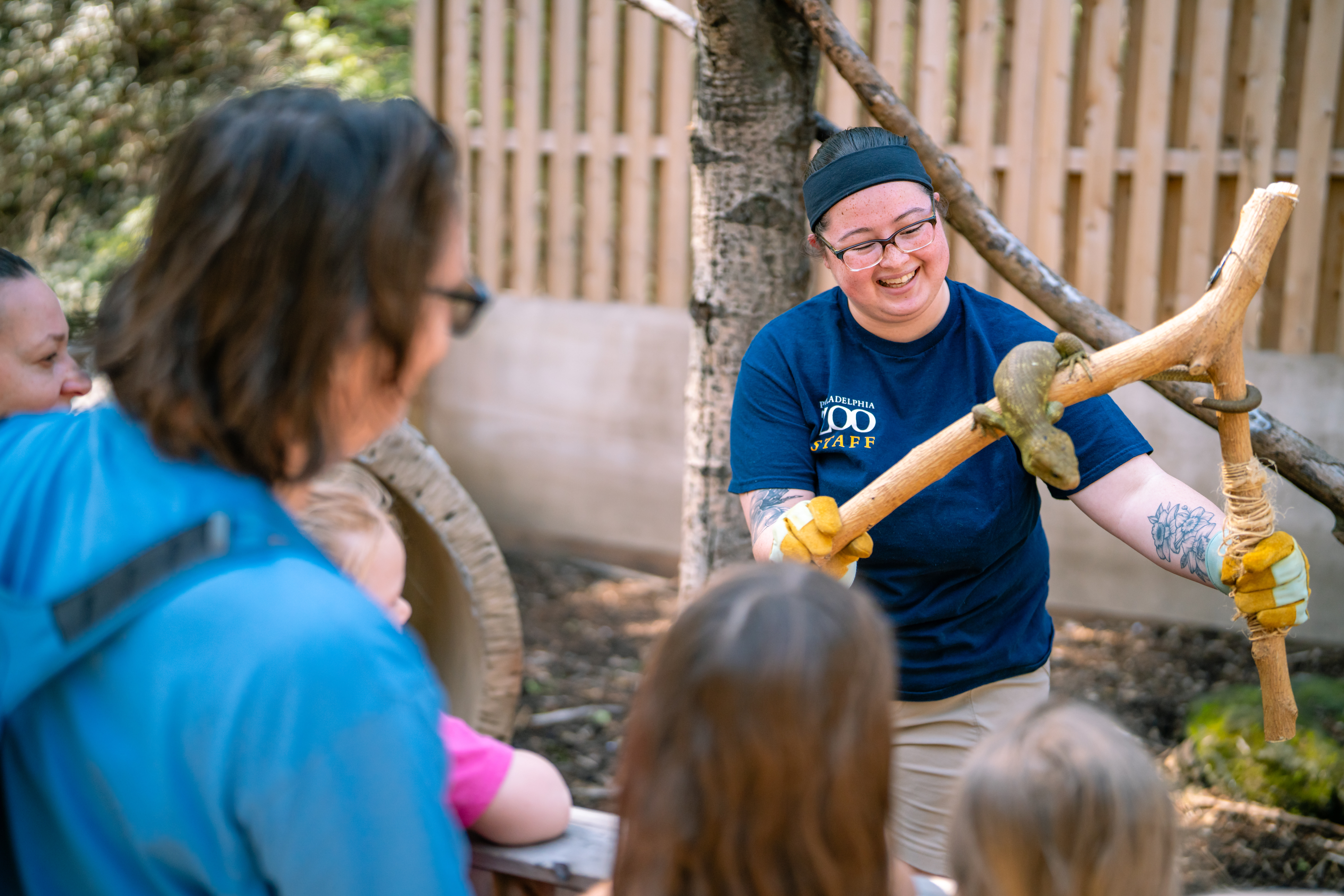
During a mingling experience, an educator or KidZooU animal care specialist brings an animal to a vet-approved space. Here, the public can learn about the animal and observe it participating in an enrichment project like painting or obstacle course training, both of which allows the animal to demonstrate behaviors it would naturally exhibit in the wild. These experiences are made available to guests two to three times every day for up to 30 minutes and are primarily dependent on whether or not the animal chooses to participate.
The majority of the animals that engage in mingling experiences are part of the ambassador animal collection. They include animals such as non-venomous snakes, birds of prey, rabbits, tarantulas, kestrels, and even a bearded dragon. The team has also been able to include some animals in the rotation that typically do not interact with guests as regularly. A good example of this would be the blue and gold macaw siblings, Machu and Picchu. The macaws are brought to a perch set along the path which means more sensory stimulation and more options for the birds to focus on as they would if they were in the trees in the wild.
While children are usually the most excited for mingling experiences, the team interacts with a variety of guests. During a session with Camilla, the three-banded armadillo, a group of adults gathered around the education specialist. For 30 minutes they discovered, inquired, and learned about the small, dynamic mammal. The group expressed their embarrassment for their interest, but the specialist used the moment to remind the guests that one can never outgrow a love and appreciation for animals.
Related Reading
 Zoo Updates

Remembering Makini
Education
The Art of Mingling
Philanthropy